Pakistan Economic Outlook 2026: Growth, Infrastructure Investment and Development Opportunities

Pakistan 2026: Stabilization, Development Spending, and CPEC 2.0
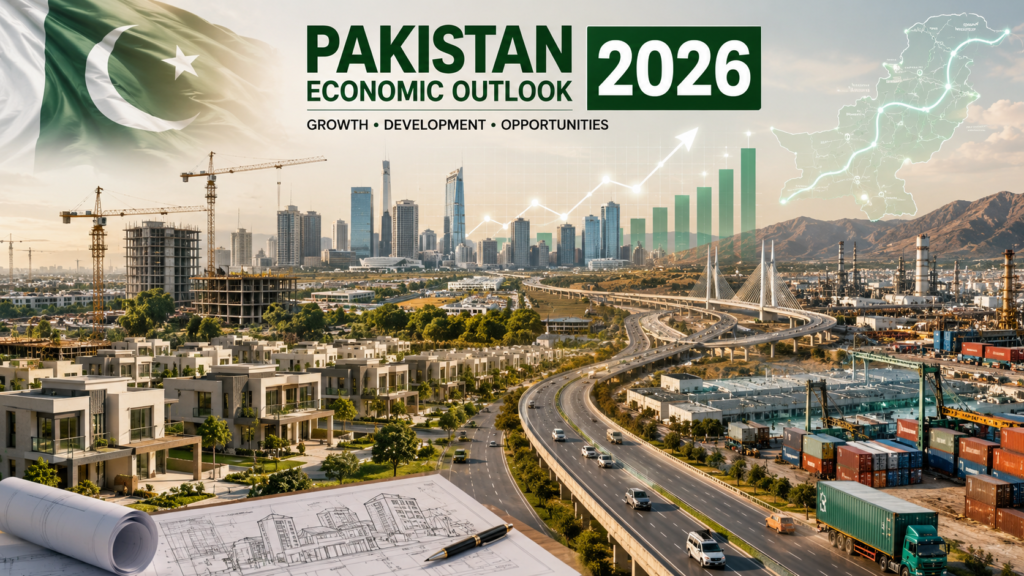
Key Takeaways

Quick Facts Table

IndicatorReported Value / Focus
Provisional GDP Growth (FY 2026)3.70%
Services Sector Contribution4.09%
Industry Sector Contribution3.51%
Agriculture Sector Contribution2.89%
Development Budget Allocation (FY 2026‑27)Rs 3.6 trillion
Proposed Development ProgrammesOver Rs 4.4 trillion (subject to review)
Strategic InitiativeCPEC 2.0 — infrastructure and industrial cooperation

Introduction

This article summarises available, verified information on Pakistan’s economic and development landscape as reported for early 2026. The government and official publications indicate a phase of cautious stabilisation, underpinned by easing inflationary pressures, improving industrial activity, and stronger fiscal outcomes. Large development allocations and renewed emphasis on infrastructure—particularly under CPEC 2.0—feature prominently in recent federal planning. The purpose of this review is to synthesise the reported facts and draw out pragmatic implications for policy watchers, businesses, and property stakeholders.

Why It Matters

Macro stability and targeted public investment are foundational to medium‑term economic performance. The reported provisional GDP growth and sectoral contributions provide a snapshot of where activity is concentrated. Simultaneously, the large development budget and multi‑trillion‑rupee programme proposals indicate a pivot towards capital spending that could shape infrastructure, urban planning, and industrial capacity. For planners, investors, and local businesses, understanding these priorities helps align expectations, identify potential demand drivers, and highlight where verification and closer due diligence will be required.

Recent Developments

Investment Snapshot

Available information suggests a policy environment that is increasingly oriented toward infrastructure, transport links, and industrial support. Key themes that emerge from the reported developments are:

These priorities may generate business opportunities in construction, logistics, urban services, and sectors that support industrial clusters. However, exact project timelines, geographic distribution, and specific scheme details require further verification from official project documents and implementing agencies.

Market Analysis

The provisional sectoral performance indicates a services‑led recovery by reported figures, with industry and agriculture also contributing positively. Notable points include:

Comparison Table

AreaReported Emphasis / Outcome
Macro StabilityEasing inflation and improved fiscal balances reported
Services SectorLargest contributor to growth (4.09% provisional)
Industry SectorRecovery signalled (3.51% provisional)
Agriculture SectorPositive contribution (2.89% provisional)
Public InvestmentRs 3.6 trillion allocated for development; proposals over Rs 4.4 trillion under review
CPEC 2.0Ongoing focus on connectivity and industrial cooperation

Investment Score

The Investment Score is qualitative. Based on reported stabilisation trends, sectoral performance, and heightened development spending, the environment may be described as cautiously improving. Public‑sector emphasis on transport, urban infrastructure, and industrial cooperation suggests selective opportunities, subject to verification of project details and implementation schedules.

Investment Insight

For investors and businesses considering exposure to Pakistan’s development agenda, a few pragmatic considerations arise from the verified information:

Buyer Checklist

Pros and Cons

Market Outlook

According to available updates, Pakistan’s near‑term market outlook is shaped by cautious stabilisation and an active public investment programme. If implementation follows through, transport and urban infrastructure spending alongside industrial cooperation could support broader economic activity. Nonetheless, outcomes will depend on detailed project rollouts, financing, and institutional capacity. Continued monitoring of official sources and on‑ground developments will be important for market participants.

FAQ

Q: What is the headline GDP number for FY 2026?

A: The provisional GDP growth reported for FY 2026 is 3.70%.

Q: Which sectors contributed most to the reported growth?

A: Reported provisional contributions are services at 4.09%, industry at 3.51%, and agriculture at 2.89%.

Q: How large is the development budget for 2026‑27?

A: The federal budget reported an allocation of Rs 3.6 trillion for development projects in FY 2026‑27, with proposed programmes exceeding Rs 4.4 trillion under review.

Q: What role does CPEC play in the 2026 outlook?

A: CPEC 2.0 is described as a continuing strategic driver, with emphasis on infrastructure connectivity and industrial cooperation in recent planning documents.

Q: Are detailed project timelines and locations available?

A: The research summary notes that specific project timelines and geographic distribution require further verification from implementing agencies and official project documents.

Sources and Recent Developments Referenced

The analysis above is based on verified summaries drawn from official government publications and public policy documents, including:

Disclaimer

This article is for general information and market awareness only. It should not be treated as legal, financial, tax, or investment advice. Property prices, approvals, possession status, development progress, society policies, and market conditions may change over time. Readers should verify all information from official society sources, government authorities, legal advisors, and on-ground inspection before making any property decision. Zamai Property Partners does not accept liability for decisions made solely on the basis of this article.

Bottom Line

Early 2026 reporting indicates a cautiously stabilising Pakistani economy supported by easing inflation, improving industrial activity, and stronger fiscal outcomes. The federal government’s notable shift toward development spending—highlighted by a Rs 3.6 trillion allocation and multi‑trillion‑rupee programme proposals—places infrastructure, transport, and industrial cooperation (including CPEC 2.0) at the centre of the policy agenda. These developments suggest selective opportunities for businesses and investors that align with public spending priorities, though detailed project verification and careful due diligence are essential.

Conclusion

Pakistan’s 2026 economic narrative, as reflected in official summaries, is one of cautious recovery and reorientation toward public investment in infrastructure and industrial capacity. Market participants should interpret the available data as a directional signal rather than definitive project‑level guidance. Close monitoring of implementing agencies, budget execution reports, and on‑ground project updates will be necessary to translate these macro‑level priorities into actionable opportunities.

Zamai Property Partners Insight

Zamai Property Partners views the reported stabilisation and development focus as important context for stakeholders assessing opportunities in construction, logistics, and urban services. We recommend that clients and partners prioritise verification of project details, engage with local advisors, and maintain a medium‑term perspective when evaluating exposure to public infrastructure programmes and CPEC 2.0 initiatives.

Zamai Property Partners Public Launch: Member Feed, Verified Listings and Live Auction Platform

Key Takeaways

Quick Facts Table

Public member feedNow publicly accessible to guests
Social featuresFollower-based engagement; influencer opportunities
Property listingsVerified and uploaded daily
Live auction platformActive; in the process of becoming fully functional
Membership perksExclusive auctions, AI layout tools, priority alerts
Transparency measuresEnforced bid integrity and AI-assisted tools
Geographic focus (not exhaustive)Platform materials reference Multan

Introduction

Zamai Property Partners has announced updates to its online platform that affect how users discover, promote, and transact property listings. According to available updates, the website has opened its member feed to the public, reinforced listing verification processes with daily uploads, and launched a live auction product that is currently active while additional capabilities are completed. Membership is described as providing additional features such as exclusive auctions, AI layout tools, and priority alerts. This article synthesizes verified platform facts and practical considerations for market participants, particularly those tracking activity in Multan.

Why It Matters

Public access to a member feed and an integrated auction system can alter how buyers, sellers, and brokers interact with property inventory online. The combination of social engagement tools and verified daily listings could affect market visibility for properties and create new buyer-seller touchpoints. The platform’s stated emphasis on transparency and enforced bid integrity is relevant to users who are evaluating trade mechanisms that rely on clear auditability and fairness in pricing interactions. For local markets such as Multan, these features may influence how properties are marketed, but on-ground verification is recommended before acting on any listing or auction participation.

Recent Developments

Investment Snapshot

The verified feature set—public member feed, daily-updated verified listings, and a live auction product—suggests the platform is positioning itself as a hybrid marketplace combining listing services, social engagement, and auction mechanics. Membership adds further functionality via AI tools and priority alerts. From a practical standpoint, these features could be relevant to buyers, sellers, and agents who value verified inventory and transparent auction processes. Specific financial or performance outcomes for listed properties are not provided in the available updates and should be independently verified.

Market Analysis

The verified facts indicate a focus on transparency, verification, and user engagement. Daily verification of listings is a user-facing control that may help reduce stale or inaccurate inventory entries. The public member feed creates a social layer where properties can be shared and promoted; the platform’s note that users can become influencers signals an intention to encourage organic promotion and follower networks.

The live auction capability, described as active but still maturing, is presented alongside enforced bid integrity measures and AI-assisted tools. These elements suggest the platform is aiming for traceability in bidding and improved user experience through automation. How quickly the auction product reaches full functionality, how users adopt auction workflows, and how the market responds to these features remain areas where the summary indicates more information is required.

Comparison Table

FeatureCurrent Status on Zamai
Member FeedPublicly accessible; social media-like engagement
Listing VerificationListings verified and updated daily
Live AuctionsActive; functionality being expanded
Membership BenefitsExclusive auctions, AI layout tools, priority alerts
Transparency / Bid IntegrityEnforced bid integrity indicated

Investment Score

Qualitative assessment: The platform presents a combined offering of verified inventory, auction mechanics, and member-only tools that may interest active buyers and sellers seeking transparent, technology-supported transactions. This assessment is qualitative and based on the verified features described; it does not reflect price predictions, returns, or financial outcomes.

Investment Insight

Practical opportunities conveyed by the platform include enhanced visibility for properties via a public feed, more frequent inventory refresh through daily verification, and a channel for market-driven price discovery via auctions. Members gain access to AI tools that are described as layout aids and to priority alerts that can improve response times to new listings or auction events. These elements may support faster marketing cycles and more interactive buyer engagement; however, market participants should confirm operational details of the auction product and the exact scope of AI tools through official channels.

Buyer Checklist

Pros and Cons

Pros

  • Public member feed may increase property visibility and engagement.
  • Daily verification of listings can reduce stale or inaccurate entries.
  • Live auctions and enforced bid integrity suggest improved transparency in transactional events.
  • Member tools such as AI layout assistance and priority alerts are designed to streamline user workflows.

Cons / Points Requiring Verification

  • The auction platform is active but still being developed toward full functionality—timing and complete feature set are not specified.
  • Claims about influencer growth and follower metrics are described but detailed performance or case studies were not provided.
  • Specifics on how AI layout tools operate and their limitations were not available in the verified materials.

Market Outlook

Available updates indicate Zamai Property Partners is expanding platform capabilities relevant to digital property discovery and transaction management. If the platform continues to enhance auction functionality and maintains daily listing verification, it may affect how certain properties are marketed and discovered online. For Multan-specific supply and demand dynamics, the platform’s presence is noted; however, no society-specific platform impacts were detailed in the material reviewed. Local market participants should monitor auction rollouts and membership feature releases while verifying individual listings and auction conditions.

FAQ

Is the member feed open to the public? According to the platform updates, the member feed is publicly accessible to visitors, including guests.

Are property listings verified? The platform indicates listings are verified and updated daily.

Is the auction platform fully functional? The live auction platform is active, but additional functionality is being implemented; exact timelines were not provided in the verified materials.

What do members receive? Membership is described as offering access to exclusive auctions, AI layout tools, and priority alerts.

Does the platform operate in Multan? The platform materials reference Multan and position Zamai Property Partners as a trusted property platform with relevance to that market; society-specific platform details were not provided.

Where can I verify listings and auction terms? The summary recommends verification from official society sources, Zamai Property Partners’ official communications, legal advisors, and on-ground inspection.

Sources and Recent Developments Referenced

Disclaimer

This article is for general information and market awareness only. It should not be treated as legal, financial, tax, or investment advice. Property prices, approvals, possession status, development progress, society policies, and market conditions may change over time. Readers should verify all information from official society sources, government authorities, legal advisors, and on-ground inspection before making any property decision. Zamai Property Partners does not accept liability for decisions made solely on the basis of this article.

Bottom Line

The verified platform updates indicate that Zamai Property Partners has made meaningful feature additions: a public member feed, daily-verified listings, and an active live auction product, complemented by member-only AI tools and priority alerts. These features collectively suggest a technology-forward approach to property discovery and transaction facilitation. However, several details—especially the final scope and timeline for auction functionality and the operational limits of AI tools—remain to be verified through official sources and on-ground checks.

Conclusion

For market participants in Multan and beyond, the platform’s verified updates warrant attention from buyers, sellers, and brokers interested in verified listings and auction-driven price discovery. The public member feed adds a social dimension that may influence marketing reach. Stakeholders should take a measured approach: assess listings through verification channels, evaluate auction participation rules carefully, and confirm membership benefits before relying on them for transactional decisions.

Zamai Property Partners Insight

According to available updates, Zamai Property Partners is positioning itself as a hybrid marketplace that blends verified listing services, social engagement, and auction workflows, with supporting AI tools and membership advantages. Readers are encouraged to follow official platform communications for functional rollouts and to perform independent verification of any listing or auction activity before making decisions.

How Pakistan’s 2026-27 Budget May Influence the Real Estate Market

Key Takeaways

The 2026-27 federal budget proposals include targeted tax reforms and compliance measures that may influence Pakistan’s real estate market. Verified updates indicate proposed reductions in certain property purchase taxes for filers, continued restrictions on non-filers, increases in seller withholding taxes, and emphasis on digitization of land records. Stakeholders and market participants are watching for final policy details and on-ground implementation. Buyers, sellers, developers, and overseas Pakistani investors are advised to seek official confirmations and perform local verification before making decisions.

Quick Facts Table

Budget cycle2026-27 (proposals and discussions)
Property purchase tax directionProposed reductions for registered filers
Withholding tax on sellersReported increase in recent proposals
Non-filer restrictionsRestrictions on property and vehicle purchases remain
DigitizationEmphasis on digitizing land records and transaction systems
Real estate relief packageProposed; details pending verification

Introduction

This article summarizes verified information about the 2026-27 budget proposals relevant to Pakistan’s real estate sector and outlines potential implications for buyers, sellers, developers, and investors. It synthesizes publicly reported updates and stakeholder commentary that have emerged around proposed tax reforms, compliance enforcement, and digitization initiatives. Where society-level or locality-specific details are absent in the available research, this article identifies those gaps and recommends on-ground verification.

Why It Matters

Taxation and regulatory changes in a national budget can reshape transaction costs, incentives, and administrative hurdles that influence market activity. The 2026-27 budget proposals include measures that, if adopted, would affect buyer affordability, seller proceeds, compliance dynamics, and investor confidence. Proposals such as tax relief for filers and land registry digitization are viewed by stakeholders as mechanisms to lower frictions and increase transparency, while measures that tighten tax collection may alter participant behaviour. Understanding these potential changes helps market actors plan due diligence and adapt strategies.

Recent Developments

Investment Snapshot

Verified developments suggest a policy environment that is seeking balance: modest buyer-side incentives for registered filers, stronger enforcement steps to expand the tax base, and targeted modernization efforts such as digitization. These combined measures may encourage compliant market participants and overseas buyers to engage with clearer transactional procedures, while increasing formal sector revenues through adjusted withholding rates. Final investor implications will depend heavily on implementation details and official notifications.

Market Analysis

The available verified information points to a nuanced market response rather than a uniform shift. Proposed reductions in purchase taxes for filers could lower entry costs and improve transaction liquidity among compliant buyers. Conversely, increases in seller withholding tax create a counterweight that may influence pricing negotiations and seller net receipts. Digitization initiatives, if executed effectively, may reduce disputes, speed up transactions, and increase investor confidence over time. However, the current information does not include confirmed numeric changes or timelines, and market reaction will depend on the final policy text and administrative execution.

Comparison Table

Policy areaProposed directionPotential effect (verified)
Property purchase taxes (filers)Reduction proposedMay lower transaction costs for filers and attract compliant buyers
Withholding tax on sellersIncrease reportedMay raise tax revenue but affect seller proceeds and negotiation dynamics
Non-filer restrictionsRemain enforcedPreserves tax compliance incentives; limits access for non-filers
Digitization of land recordsEmphasizedMay improve transparency and transaction security if implemented
Relief packagesProposed (details pending)Could influence construction and overseas investment if finalized

Investment Score

Qualitative Assessment: Cautiously Positive for Compliant Participants. The proposals suggest selective easing for registered filers and emphasis on transparency, which may be encouraging for market participants who operate within formal channels. At the same time, increased seller withholding taxes and ongoing compliance measures create trade-offs that warrant careful evaluation. The overall score reflects potential opportunities for compliant buyers and developers, tempered by implementation uncertainty.

Investment Insight

Investors should consider the policy mix: tax relief targeted at filers alongside stricter compliance and higher withholding for sellers. This structure suggests that formalization and registration could be beneficial for buyers and overseas investors seeking clarity and reduced upfront transaction taxes, while sellers and developers should assess how withholding changes affect cash flows. Digitization of land records is a structural reform to monitor closely—if executed well, it may reduce long-term legal and transactional risks.

Buyer Checklist

Pros and Cons

Market Outlook

Given the verified information, the short- to medium-term market outlook is conditional on policy finalization and execution. If tax relief for filers and digitization measures are implemented with clear administrative guidance, these steps could support more transparent transactions among compliant participants. However, changes to seller withholding and continued enforcement on non-filers may temper market exuberance and shift behaviour toward formalization. Market participants should treat current signals as provisional and monitor official releases closely.

FAQ

Q: Are property purchase taxes being eliminated?
A: No. The verified facts indicate proposed reductions for registered filers, not elimination. Exact figures are not available in the verified material.

Q: Will non-filers be able to buy property?
A: Verified information indicates that restrictions on non-filers for property and vehicle purchases remain part of the compliance framework.

Q: Does this budget guarantee a construction boom?
A: The research suggests stakeholders hope for a construction and housing revival if relief measures materialize, but there is no verified claim guaranteeing such an outcome.

Sources and Recent Developments Referenced

This article uses verified public reporting and stakeholder summaries related to the 2026-27 budget proposals and real estate sector responses. Source types referenced include official and news reports on Pakistan’s budget 2026-27, statements from real estate stakeholders and lobbying groups, property market analysis pieces, and public updates. Recent developments summarized are based on those verified reports and stakeholder commentary; where specific numeric or society-level data are absent, this has been noted and verification recommended.

Disclaimer

This article is for general information and market awareness only. It should not be treated as legal, financial, tax, or investment advice. Property prices, approvals, possession status, development progress, society policies, and market conditions may change over time. Readers should verify all information from official society sources, government authorities, legal advisors, and on-ground inspection before making any property decision. Zamai Property Partners does not accept liability for decisions made solely on the basis of this article.

Bottom Line

The verified budget proposals for 2026-27 indicate a mixed policy approach: selective tax relief for registered filers and digitization priorities alongside stronger compliance measures and higher seller withholding taxes. These measures could favour formally registered participants and support transparency, but the final effects depend on policy detail and implementation. On-ground verification and official notifications remain essential steps for all market actors.

Conclusion

Pakistan’s 2026-27 budget discussions contain elements that may influence real estate behaviour: targeted buyer-side incentives for filers, increased compliance enforcement, seller-side withholding adjustments, and an emphasis on land record digitization. While these developments suggest potential benefits for formal market participants, the absence of fully confirmed numeric changes and implementation timelines means stakeholders should proceed cautiously and verify details through official channels before acting.

Zamai Property Partners Insight

For buyers and investors focused on the Pakistani market, the verified signals point to the importance of operating within formal channels and monitoring digitization progress. Sellers and developers should evaluate contractual provisions to manage withholding tax exposures. For locality-specific decisions—especially in Multan societies such as DHA Multan, Royal Orchard Multan, Buch Villas, Citi Housing Multan Phase 1, Wapda Town Phases 1–3, Dream Gardens Phases 1–2, PC Colony/Pearl City, Hateem City, Faisal Cottages, Cantt Avenue near Askari Bypass, Model Town/New Model Town, Shalimar Colony, Zikriya Town, and Fatima Avenue/MPS Road residential belt—on-ground verification is recommended because no verified society-level budget impacts were identified in the available research.

Real Estate in Multan: Complete Guide to Areas, Societies & Investment Tiers


The Scope of Real Estate in Multan: A Complete Area & Housing Society Guide | Zamai Property Partners

The Scope of Real Estate in Multan: A Complete Area & Housing Society Guide

Multan has quietly become one of Pakistan’s most interesting real estate markets — not flashy like Lahore or Karachi, but with the kind of steady fundamentals that long-term investors learn to look for.

A growing population, infrastructure investment via the Multan–Sukkur Motorway and Multan Metro Bus, expanding educational institutions, and a meaningful overseas Pakistani diaspora sending capital home have all reshaped the city’s property landscape over the past decade.

For anyone considering Multan property — whether as an investment, a future home, or a hedge for overseas income — the city now offers a tiered market that rewards understanding the geography. This guide walks through what’s actually available, area by area, society by society, and what to watch for before committing capital.

Why Multan, and Why Now

Three trends are quietly compounding in Multan’s favor.

The first is infrastructure. The Multan–Sukkur Motorway has placed the city firmly on Pakistan’s primary north–south trade route. Multan International Airport now handles direct flights to the Gulf, where most of the city’s diaspora lives and earns. Internal connectivity has improved with the Northern Bypass and the Metro Bus, which together have opened up corridors that were rural fringe a decade ago.

The second is demographics. Multan’s population is young, growing, and increasingly urban. Demand for housing — both rental and owned — is structural, not speculative. Educational institutions like Bahauddin Zakariya University, NFC Institute of Engineering, and a cluster of medical and IT colleges keep pulling students and professionals into the city.

The third is capital inflow. Multanis working in the Gulf, Saudi Arabia, the UK, and the US have always sent money home, but property has become the default destination for that capital. A meaningful share of new society plots and ready houses are bought by buyers who live abroad and rarely visit the property in person. This shapes which segments of the market are most liquid.

The result is a market where premium societies command Lahore-adjacent prices in pockets, while emerging corridors still offer genuine entry points for new investors. Understanding the tiers is the whole game.

Multan Property Tiers at a Glance

Area / SocietyTierBest Suited For
DHA MultanPremiumLong-term hold, diaspora safety play
Citi Housing Phase 1 & 2PremiumBranded community, modern lifestyle
Royal Orchard MultanMid-PremiumModern society without DHA-level entry cost
Wapda TownMid-PremiumSettled professional families, ready houses
Model TownMid-PremiumEstablished community, walkable amenities
Buch Executive VillasMid-PremiumModern villa living, central location
Gulgasht ColonyMid-RangeMature 1-kanal homes, established families
Shalimar ColonyMid-RangeBuilt-in community, rental yield
Fatima Jinnah TownMid-RangeEstablished residential, mixed plot sizes
BahadurpurMid-RangeMid-sized family houses, accessible pricing
Zakariya TownEntry-LevelWider plot variety, broader affordability
Northern Bypass CorridorEmergingHigher upside, longer time horizon
Fatima AvenueEmergingNewer residential corridor, growing demand
MPS Road / Abdali Road / CanttPremiumCommercial property, established rental yield

The Premium Tier: DHA Multan and Citi Housing

These two developments dominate the conversation when anyone — especially diaspora buyers — asks about premium Multan property.

DHA Multan sits on the Bosan Road side, well-connected to the city centre and the airport. It carries the Defence Housing Authority brand, which translates into clean documentation, military-backed governance, and consistent maintenance. Plots range from 5 marla up to 2 kanal, with prices commanding the highest per-marla rates in Multan. Sector-by-sector pricing varies considerably — developed sectors with infrastructure and possession trade at multiples of undeveloped or balloted sectors. The risk profile is low and the exit liquidity is high. For overseas Pakistanis who want a “safe” Multan investment, DHA is usually the first conversation.

Citi Housing Phase 1 and Citi Housing Phase 2 are among Multan’s most recognizable branded developments. Phase 1 is the more established of the two, with developed infrastructure, possession largely handed over, and a settled resident population. Phase 2 is the newer expansion, with infrastructure progressing and a longer appreciation runway ahead. Both phases offer modern community planning — wide roads, parks, security, and commercial pockets — and they pull buyers from across Pakistan, not just Multan. The brand recognition keeps demand liquid, which matters when you eventually need to sell. Construction quality and possession reliability have been among the better in Multan’s branded society segment.

Both developments share the same fundamental appeal: brand-backed legitimacy, broad recognition, and the kind of resale liquidity that matters at exit. The downside is the entry price — these are not affordable for a typical first-time investor, and rental yields are modest relative to the capital tied up. They are appreciation plays, not income plays.

The Established Mid-Premium: Wapda Town, Model Town, Royal Orchard, Buch Villas

The next tier comprises the societies that established Multan’s reputation as a serious real estate market in the first place.

Wapda Town Multan was developed for the WAPDA workforce but has matured into one of the city’s most desirable established neighborhoods. The layout is well-planned, the infrastructure is fully developed, the population is settled and stable, and the area enjoys a reputation for being safe, clean, and well-serviced. Prices reflect this maturity. There are fewer empty plots and more ready houses, which makes it a market for buyers who want to live, not just speculate.

Model Town Multan is similar in profile — fully developed, settled, with strong demand from local professional families. Both 1 kanal and 10 marla sizes dominate. The area has seen steady appreciation rather than dramatic swings, which suits the conservative investor or the family genuinely planning to move in. Schools, hospitals, and commercial pockets are all walkable.

Royal Orchard Multan is a newer entrant that has carved out a position between premium branding and a more accessible price point. Possession is well underway, construction quality has been solid, and the location keeps it connected. It’s worth a serious look for buyers who want a modern society without the DHA or Citi Housing premium.

Buch Executive Villas has become a recognizable name in Multan’s mid-premium segment, offering modern villa-style construction in a planned community. The development appeals to buyers who want a ready home rather than the wait of plot-and-construction, and to families who value the security and amenities of a managed community.

These four societies share a profile: established or rapidly establishing, lower volatility, better suited for buyers with a 5–10 year horizon than speculative flippers.

The Local Heart: Shalimar Colony, Bahadurpur, Gulgasht, Fatima Jinnah Town, Zakariya Town

If you want to understand how Multan locals actually live and where established Multani families have owned property for decades, you look at this cluster.

Shalimar Colony is one of Multan’s most well-known older neighborhoods — close to commercial centres, walking distance to several major schools, and home to a deeply rooted community. Plot sizes are mixed, from small 3 and 5 marla plots to larger 10 marla houses. Prices per marla are reasonable relative to the premium societies, and rental yields can be attractive because demand from local renters is consistent. The architecture is varied — some streets have beautifully maintained older homes, others are newer construction. For buyers who want a property in an area with built-in community rather than a half-empty new society, Shalimar deserves attention.

Bahadurpur has emerged as a popular area for mid-sized plots and family houses, particularly on the residential streets branching off the main road. It’s well-connected and has seen consistent demand. Prices are accessible compared to the premium societies, and the area is fully developed with established utilities and services.

Gulgasht Colony is among the older planned neighborhoods of Multan — larger plots, mature trees, established families, and a sense of permanence. It tends to attract buyers looking for established 1 kanal homes rather than empty plots. The neighborhood has held its value because supply is finite and demand from established families is steady.

Fatima Jinnah Town is a long-established residential area with a mix of plot sizes and a settled community feel. It offers the kind of mid-range stability that suits buyers who want a real neighborhood rather than a marketing campaign — schools, mosques, shops, and a network of families who’ve lived there for years.

Zakariya Town, named after the city’s revered Sufi saint Bahauddin Zakariya, is a substantial residential area with broad appeal across income levels. The variety of plot sizes — from compact 3 marla to 1 kanal — makes it accessible to a wider range of buyers, and it has seen meaningful price appreciation over the past several years. Category A plots near the main boulevard are particularly sought after.

These areas collectively represent “real Multan” — neighborhoods where you can buy a property, move in, and immediately be part of a living community rather than waiting years for development.

The Emerging Corridor: Northern Bypass, MPS Road, Fatima Avenue

The most interesting investment story in Multan over the next decade is probably the corridor opening up along the Northern Bypass and adjacent arterial roads.

Northern Bypass plots — particularly commercial frontage — have appreciated substantially as the bypass has become a primary connector. What was once rural land is now commercial corridor with petrol stations, marriage halls, warehouses, and small industrial units. The next phase will likely be planned residential developments feeding off this connectivity. Entry prices are still meaningfully below the established premium societies, which is where the upside lies.

MPS Road (Multan Public School Road) has matured into one of the city’s most desirable commercial and mixed-use addresses. Properties here trade as commercial first, residential second, and command prices that reflect that.

Fatima Avenue and the surrounding pockets have emerged as a newer residential corridor with both plot and house inventory. Connectivity to the main city is improving and pricing remains reasonable.

The thesis for this emerging corridor is straightforward: infrastructure investment usually leads to price discovery with a 5–10 year lag. Multan’s bypass and motorway connections have been built; the property market is still catching up to what that connectivity means for accessibility.

Commercial Multan: Cantt, Abdali Road, MPS Road

For investors interested in commercial property rather than residential, Multan’s commercial heart is concentrated along a few well-established corridors. The Cantt area, Abdali Road, and MPS Road carry the highest commercial rents and the highest entry prices. Yields are stronger than residential premium societies, but the entry capital is significant and tenant management becomes a real consideration. The bypass commercial plots discussed above are the more accessible entry point for someone building a commercial portfolio gradually.

What to Actually Watch Out For

Multan’s real estate market — like all Pakistani property markets — rewards skepticism. A few honest things to keep in mind before signing anything.

Society legitimacy varies enormously. DHA, Citi Housing, Royal Orchard, Wapda Town, and the well-established old neighborhoods are not the issue. The issue is the dozens of smaller “societies” that have launched over recent years with aggressive marketing, partial NOC approval, and unclear timelines. Some will mature into legitimate developments. Others will not. Before buying in any society that isn’t on the established list above, ask for the NOC status from the Multan Development Authority, the master plan approval, and the development timeline in writing.

Plot files versus possession plots are different markets. A “file” you buy today might be a real plot in three years — or might not. The premium goes to plots with confirmed possession and developed infrastructure. If you’re buying for capital appreciation specifically, files can outperform — but only if the society delivers. Diaspora buyers especially should be cautious here because verifying status from abroad is difficult.

Always verify ownership history. Property fraud — fake fards, double-sold plots, encroached land, undisclosed court cases — is the single biggest risk in Pakistani real estate. Before paying anything substantial, get the registry papers verified independently, ideally by a lawyer who has no relationship with the seller or dealer.

Be honest about exit liquidity. Premium societies and established neighborhoods sell quickly when you want out. Plots in emerging societies or marginal locations can sit on the market for a year or more. Match your time horizon to the area’s liquidity profile.

Negotiate. Always. Listed prices in Multan, as in most of Pakistan, are usually starting points. Serious buyers consistently transact 5–15% below the initial asking price, particularly for plots sitting unsold or sellers in a hurry.

Where the Smart Money Is Going

If you were to summarize Multan’s real estate scope in one paragraph, it would be this: the established premium societies offer safety and steady appreciation at high entry prices, the older settled neighborhoods offer real community and reasonable yields, and the emerging corridors offer the highest upside with proportionally higher risk. The right answer depends on your time horizon, your appetite for verification work, and whether you intend to live in the property or hold it from a distance.

For overseas Pakistanis, the conservative playbook is one premium society plot (DHA or Citi Housing) as a long-term hold, paired with an established neighborhood house (Wapda Town, Model Town, Buch Villas, or Shalimar) for either family use or rental income. For local buyers building wealth from a smaller base, the emerging corridors and Zakariya-tier areas offer real entry points where capital can still appreciate meaningfully.

Multan isn’t going to surprise anyone with a 200% boom year. But that’s not the city’s profile — it’s a market that compounds steadily for buyers who do the work. And that, over a decade, is usually how the most successful property portfolios get built.

Looking for verified Multan properties?

Every Zamai listing is independently checked. Members get full disclosure on title, history, and any concerns before bidding.

Browse Live Listings
Disclaimer

This article is intended as a general overview of Multan’s real estate landscape and is published for informational purposes only. It is not investment advice, legal advice, or a recommendation to buy, sell, or hold any specific property. Property market conditions, prices, society approval status, and development timelines change frequently and vary by individual plot and seller.

Before committing to any property transaction, readers are strongly encouraged to conduct independent verification of title, ownership history, NOC approval, and society legitimacy through qualified legal counsel and the relevant regulatory authorities including the Multan Development Authority. Zamai Property Partners is committed to transparency on every property we list — but no article, including this one, replaces the due diligence each buyer must do for themselves.

References to specific housing societies, areas, and developments are based on publicly available information and our general market observation. Inclusion in this guide does not constitute endorsement, nor does omission imply any negative assessment.